Why Websites Ask for Email & When to Use Temporary Email
On this page
Websites ask for your email address primarily to create a unique login identifier for your account, send you marketing campaigns, and track your behavior across different platforms and advertising networks. Because an email address rarely changes, it serves as a reliable bridge that connects your browsing habits, shopping history, and personal profile behind the scenes. When you only need quick access to a page or download without wanting a long-term relationship with a brand, using a temporary email lets you get what you need while keeping your primary inbox private.
Understanding the difference between a site that genuinely needs to reach you and one that simply wants to harvest your contact details makes everyday browsing much safer. Let’s break down why websites ask for email addresses so aggressively, what happens to your address the moment you click submit, and how to control who gets access to your real inbox.
The 5 Core Reasons Websites Ask for Your Email
Not every email prompt has a shady motive. Depending on what a website does, asking for your address falls into one of five practical categories.
1. Account Identity and Password Recovery
When you create an account on a website, the system needs a unique string of text to tell you apart from every other user. Phone numbers can change when people move or switch carriers, and usernames quickly run out of simple combinations. Because no two people share the exact same email address, developers rely on your email as an identifier in their database.
Beyond acting as your username, your email serves as a built-in security anchor. If you forget your password or log in from an unrecognized device, the website sends a reset link or a one-time verification code to that inbox to confirm you are the rightful owner.
2. Direct Marketing and Newsletter Lists
Social media algorithms change constantly, and search engine ads are expensive. If a business relies solely on social platforms or paid ads to reach visitors, it has to pay every time it wants your attention. Once a company has your email address, however, it owns a direct communication channel to your phone and computer screen for pennies.
This is why retail stores and media sites display full-screen pop-ups offering a small discount or newsletter signup within seconds of your arrival. Converting an anonymous visitor into a subscriber on a marketing list gives the company repeated opportunities to pitch products, announce sales, and recover abandoned shopping carts.
3. Lead Magnets and Gated Content
If you have ever searched for a software template, a financial calculator, an industry report, or a recipe book, you have likely run into "gated content." Instead of letting you view the file right away, the site puts the download behind a form that requires your name and email address.
In marketing terms, that free resource is called a lead magnet. You aren't really getting the guide or checklist for free; you are paying for it with your contact information. Once you download the file, an automated software sequence typically adds your address to a follow-up campaign designed to pitch a paid service or subscription. If you just want the document without weeks of sales pitches, you can learn more in our guide on downloading free e-books and whitepapers without the follow-up emails.
4. Bot Prevention and Abuse Control
Automated bots constantly scrape websites, post comment spam, and abuse interactive tools like AI generators or file converters. Requiring users to verify an email address adds a small friction step that stops basic automated scripts from flooding a platform with junk requests.
5. Transactional Updates and Customer Support
When you buy a concert ticket, book a flight, or order physical goods, the website needs a reliable place to send your receipt, invoice, and shipping tracking number. These are known as transactional emails. Unlike promotional newsletters, transactional messages are triggered directly by an action you requested and contain important records you usually want to keep.
What Happens Behind the Scenes After You Hit Submit?
To most users, typing an email address into a box feels harmless—after all, you can always click "unsubscribe" later if they send too many messages. In reality, your inbox receiving messages is only the visible half of what happens to your email marketing data.
CRM Storage and Behavioral Tracking
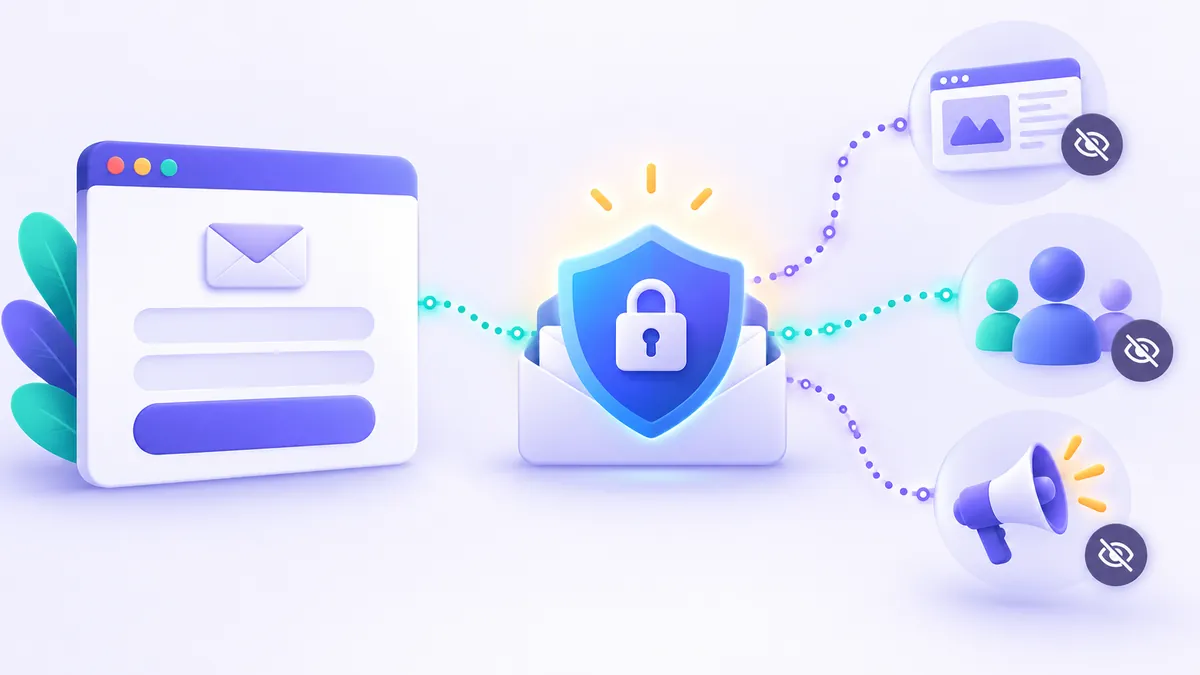
The moment you submit a form, your address rarely goes into a simple spreadsheet. Instead, it flows into a Customer Relationship Management (CRM) platform or a Customer Data Platform (CDP). At the same time, the website drops a tracking cookie in your browser and links your previously anonymous browsing history to your newly identified email address.
From that point on, the company can see which product pages you visited before signing up, how often you return to the site, and which emails you open. Many marketing messages include tiny, invisible graphics called tracking pixels that report back when you open an email, your general location based on your IP address, and what type of device you use.
Cross-Platform Ad Matching
Have you ever given your email address to an online shoe store and noticed ads for those exact shoes inside your social media feeds an hour later—even if you cleared your browser cookies? That happens because your email acts as a universal passport across the advertising industry.
Before sharing your list with an ad network, the website converts your email address into a scrambled string of letters and numbers using a mathematical formula called hashing (for example, turning name@example.com into a fixed code). The website uploads that hashed code to social networks and ad brokers. Because you logged into those social apps using the exact same email address, the social platform hashes its own user list, matches the two codes, and begins serving targeted ads directly to your feed.
Data Enrichment and Broker Sharing
Many companies use third-party "data enrichment" services to learn more about their subscribers. By passing an email address to an enrichment provider, a company can automatically attach public records and commercially bought data to your profile. Depending on what is already circulating in commercial databases, a single email address can allow a business to infer your approximate age bracket, job title, company size, household income tier, and general interests.
Furthermore, if a site's privacy policy states that it shares data with "selected marketing partners" or "affiliates," your address may be bundled into demographic lists and rented or sold to companies you have never interacted with directly.
The Long-Term Risk of Data Breaches
Even when a website has zero intention of spamming you or selling your profile, storing your email in its database creates a permanent liability. Small forums, niche stores, and forgotten apps are frequent targets for credential-stuffing attacks and database leaks. If a site you visited once three years ago suffers a security breach, your real email address ends up on public breach lists alongside whatever password or personal details you entered at the time.
Watch out for password reuse: Because websites pair your email identifier with your password in their databases, using the same email and password combination on low-security sites puts your primary accounts at risk if any one of those sites is compromised.
Real Email vs. Alias vs. Temporary Email: What to Give and When
You do not have to hand over your primary personal or work address to every site that asks for it. A smarter approach is to match the type of email you provide to the level of trust and longevity the website actually deserves.
| Website Scenario | Why They Ask for Your Email | Best Option to Use | Why This Choice Makes Sense |
|---|---|---|---|
| Banking, Healthcare, Government, Taxes | Identity verification, security alerts, legal notices | Primary Real Email | You need permanent access, strict security, and reliable account recovery. |
| Major Online Retailers & Airlines | Order receipts, shipping updates, ticket delivery, returns | Secondary Inbox or Email Alias | Keeps order records searchable while keeping retail promotions out of your main inbox. |
| Software Testing, New Apps, Forums | One-time verification link, gating free tools, community sign-up | Temporary Email | Lets you test the platform without committing your real identity before you trust it. |
| Gated PDFs, Coupons, Public Wi-Fi Portals | Lead generation, marketing lists, tracking foot traffic | Temporary Email | Delivers the instant code or download link while blocking ongoing follow-up spam. |
When Your Real Email Is Essential
Any service tied to your money, legal identity, employment, or long-term personal files requires an email account that you own permanently and protect with two-factor authentication. If you ever get locked out of a bank account or cloud storage drive, support teams will ask you to verify ownership through that registered inbox. Read our guide on when not to use a temporary email for a complete breakdown of high-stakes accounts.
When to Use an Email Alias
If you are signing up for a newsletter you actually want to read, or creating a shopping account where you might need to check order history six months from now, an email forwarding alias is ideal. An alias forwards messages to your real inbox, allowing you to reply or reset passwords later, while still letting you turn off the alias if the company starts spamming you.
When a Temporary Email Is the Best Fit
When a website puts up an unnecessary registration wall just to let you read an article, unlock a single download, connect to airport Wi-Fi, or try new apps and services without handing over your real email, a disposable inbox is the fastest solution.
With FakeEmail.net, you get a free temporary email address the moment you open the page—with no registration, no password, and no personal details required. You simply copy the address, paste it into the website's sign-up form, and read the incoming verification message or download link right on the same screen as the inbox refreshes automatically. If you want a custom handle, you can pick your own username with the "Change" button and manage up to 10 addresses in a single browser session.
Keep these important boundaries in mind whenever you use a disposable inbox:
- It is not a private mailbox: Anyone who knows or guesses a specific address on a public disposable domain can open its inbox. Never use it for banking, private documents, or sensitive personal data.
- It is receive-only: You can read incoming messages and click confirmation links, but you cannot send or reply to emails from a FakeEmail.net address.
- Sessions are temporary: Your inbox is tied to your browser session rather than a permanent account, and the session ends after about two hours of inactivity (though you can reopen the same address name later using the "Change" button).
- Respect fair use: Some websites choose to block disposable email domains, and temporary addresses must never be used for fraud, evading bans, or abusing free trials and promotions.
If your goal is simply keeping data brokers from linking your everyday browsing to your personal profile, see how you can protect your privacy online with a disposable email.
Your Legal Rights Over Your Email Data
Depending on where you live—and where the website you are visiting operates—consumer privacy laws restrict what companies can do with your email address after they collect it.
- The Right to Opt Out of Marketing: Under laws like the US CAN-SPAM Act and international anti-spam rules, legitimate commercial emails must include a clear, working way to opt out of future promotional messages. The Federal Trade Commission (FTC) consumer guide on reducing spam explains what businesses are legally required to honor when you unsubscribe.
- The Right to Access and Deletion (GDPR / UK GDPR): If you are in the European Union or the United Kingdom, organizations must have a lawful basis (such as explicit consent or a legitimate contract) to process your email. You also have the "right to erasure," meaning you can ask a company to permanently delete your email address and associated profile from its databases once it is no longer needed for the original transaction. You can learn how to submit a formal request through the UK Information Commissioner's Office (ICO) guide on getting your data deleted.
- The Right to Stop Data Selling and Sharing (CCPA): Residents of California and several other jurisdictions have the right to tell businesses not to sell or share their personal information—including hashed email identifiers used for cross-context behavioral advertising. Details on how these protections work are available on the California Attorney General's CCPA portal.
Practical tip: While legal rights are helpful for cleaning up old accounts, forcing a company to delete your data after the fact takes time and follow-up emails. Not handing out your real address in the first place is always faster than filing a deletion request later.
Practical Habits to Keep Your Inbox Under Control
Before you type your real address into the next form you see, pause for three seconds and run through a quick checklist:
- Look for the "Continue as Guest" button: Many e-commerce checkouts design the account creation screen to look mandatory while tucking the guest checkout option in smaller text below.
- Inspect pre-checked boxes: When you must provide an email for a receipt or ticket, check the area right above the submit button. Uncheck any boxes that say "Keep me updated on news and partner offers."
- Ask if you will care about this site next week: If you are only visiting a website once to view a single result, download a PDF, or verify a throwaway forum post, use a temporary email address instead of giving away a permanent piece of your digital identity.
Frequently asked questions
Can a website find out who I am just from my email address?
Yes, often they can. Even if your email username does not contain your real name, businesses use data enrichment services to match your email address against commercial databases, social media accounts, and public records to attach your name, location, and demographic profile.
Why do websites ask for an email just to give a discount code?
Instead of showing the promo code right on the page, retailers trade the discount for permission to add you to their marketing list. That allows them to send automated follow-up emails and upload your hashed email address to advertising networks so they can show you targeted ads later.
If I unsubscribe from a website's newsletter, do they delete my email address?
Usually not. Clicking unsubscribe only tells the company's marketing software to put your address on a suppression list so it stops sending promotional messages. Your email and browsing history typically remain stored in their database unless you submit a formal data deletion request.
Why do some websites block temporary email addresses?
Some websites block known disposable email domains because they want to prevent automated bots, stop users from claiming multiple promotional offers, or ensure that every sign-up goes into a long-term marketing list. When a site blocks disposable domains, it is best to use an email alias or a secondary inbox you control.
Is it safe to use a temporary email when a website asks for verification?
It is safe for low-stakes tasks like downloading a free guide, trying out a new tool, or signing into public Wi-Fi. However, because temporary email inboxes are public to anyone who knows the address and do not stay active permanently, you should never use them for banking, shopping receipts, or accounts containing sensitive information.
Need a disposable address right now? Get one free in a single click — no sign-up.
Get a temp email